

Picture this: the tokenized U. S. Treasury market blasts past $10 billion in total value, with institutions piling in faster than ever. At the forefront? Ondo Finance's OUSG and Franklin Templeton's BENJI, two tokenized T-bill giants battling for supremacy in yields, liquidity, and institutional appeal. As of February 9,2026, OUSG clocks in over $770 million TVL while BENJI boasts a $892 million market cap. For finance pros eyeing tokenized treasuries yields 2026, this Ondo OUSG vs Franklin BENJI showdown reveals who delivers the edge in a DeFi-meets-TradFi world.
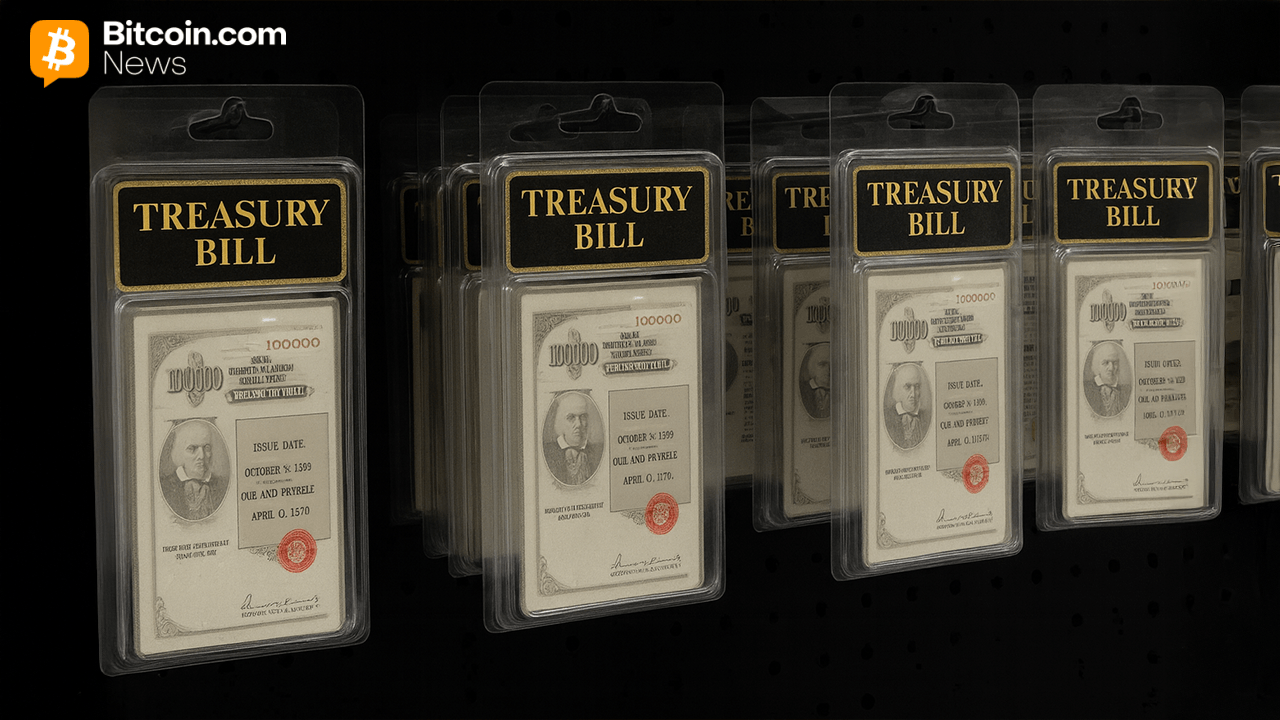
Tokenized T-bills aren't just hype; they're reshaping fixed-income investing. Ondo and Franklin Templeton lead the charge, offering blockchain-powered exposure to safe U. S. government securities. OUSG targets qualified U. S. investors with seamless BlackRock and Fidelity backing, while BENJI innovates with yield precision that traditional funds can't touch. Institutions love the 24/7 settlement, composability with DeFi, and yields that beat parking cash in banks.
Ondo OUSG: Liquidity That Never Sleeps
Ondo Finance has cemented its spot as the top tokenized Treasury provider, and OUSG is the star. Surpassing $770 million in TVL, this bad boy thrives on multi-chain accessibility - think Ethereum, Solana, and beyond. Partnerships with heavyweights like Fidelity and BlackRock supercharge its credibility, drawing institutions wary of crypto's wild side. Imagine redeeming T-bill exposure same-block, any hour, without counterparty drama. That's OUSG's visual appeal: a sleek dashboard showing real-time yields, backed by short-term U. S. Treasuries that scream safety.
What sets OUSG apart in the tokenized T-bills comparison? Its growth mirrors the market's 7% weekly jump, outpacing rivals in asset holders and integrations. For active traders, the 24/7 liquidity means no more waiting for market open - just pure, on-chain efficiency. Ondo's ecosystem, including USDY, pushes combined TVL near $1 billion, signaling bold institutional adoption.

Franklin BENJI: Yield Innovation Redefined
Enter BENJI, Franklin Templeton's $892 million market cap powerhouse. This isn't your grandpa's money market fund; BENJI's patent-pending Intraday Yield flips the script. Yield accrues and distributes proportionally down to the second, even on weekends or holidays. Hold for 47 minutes? You pocket exactly 47 minutes of yield. Visual traders, envision a graph where every tick compounds your returns - no daily resets diluting your edge.
Holding over $800 million earlier reports confirm BENJI's muscle, sharing 9-10% of the $10 billion and pie with OUSG. Franklin's TradFi pedigree reassures conservative allocators, blending blockchain speed with audited reserves. In a world where tokenized private credit eyes $10-15 billion by year-end, BENJI positions institutions for RWAs convergence, offering Treasury safety with DeFi upside.
Yield Face-Off: Numbers Don't Lie
Drilling into OUSG vs BENJI yields, both track short-term T-bill rates hovering around benchmark Fed funds, but features diverge. OUSG delivers steady, daily-accruing yields with multi-chain composability for lending or staking. BENJI's intraday magic maximizes every moment, potentially edging out in high-turnover strategies. Risks? Minimal - both are overcollateralized by actual Treasuries, with transparency via on-chain proofs. Yet, smart contract audits and chain congestion matter for institutions.
Ondo OUSG vs Franklin BENJI: Tokenized T-Bill Yield Comparison for Institutions 2026
| Metric | Ondo OUSG | Franklin BENJI |
|---|---|---|
| TVL 💰 | $770M | ~$892M |
| Yield Mechanism ⚡ | Daily 📅 | Intraday to second ⏱️ |
| Liquidity 🔄 | 24/7 Multi-chain 🌐 | On-chain 🔗 |
| Partnerships 🤝 | Fidelity/BlackRock 🏦 | Franklin Templeton 🏛️ |
| Market Share 📈 | ~10% | ~10% |
Institutions stacking institutional tokenized treasuries weigh these: OUSG for ecosystem depth, BENJI for yield precision. Market anatomy shows private credit at 58%, but Treasuries like these anchor the RWA boom. Platforms evolve fast - same-block settlement keeps competitors sharp.
Picture the RWA landscape exploding, with tokenized Treasuries crossing $10 billion as banks and exchanges jump in. Ondo OUSG and Franklin BENJI each command around 9-10% slices of that pie, fueling a convergence where DeFi composability meets stablecoin rules and mainstream adoption. For institutions, the real game-changer lies in how these tokens stack up against traditional T-bills - higher liquidity, instant settlement, and yields that don't sleep.
Risks in the Spotlight: Safety First, Always
Don't get blinded by the shine; tokenized T-bills carry smart contract vulnerabilities and chain-specific hiccups. OUSG mitigates with BlackRock's ironclad backing and multi-chain spreads, reducing congestion risks on Ethereum. BENJI leans on Franklin's audited reserves and on-chain transparency, but its intraday wizardry demands flawless oracles. Both crush traditional funds on liquidity - no T and 1 delays - yet institutions scrutinize redemption windows and collateral proofs. In my view, OUSG edges for diversification across chains, while BENJI's precision suits yield-hungry traders. Tokenized private credit grabbing 58% market share? Treasuries like these provide the ballast.
Ondo OUSG vs Franklin BENJI: Key Metrics Comparison for Institutions (Feb 2026) 📊
| **Metric 💼** | **Ondo OUSG** 🚀 | **Franklin BENJI** 🏦 |
|---|---|---|
| TVL 💰 | $770M | $892M |
| Weekly Growth 📈 | +12% (leader) | +6% |
| Yield Rate 💰 | 4.9% APY | 5.1% APY (Intraday*) |
| Trading Volume (Weekly) 📊 | $55M | $72M |
| Volatility (30d) ⚡ | 0.25% | 0.35% |
Zoom out to 2026 predictions: RWAs mainstreaming hard, with tokenized credit ballooning to $10-15 billion. Ondo leads TVL races, but BENJI's innovations could flip scripts. Institutions shipping these onchain eat market share from legacy players - think same-block Treasury exposure without the fax machines.
2026 Outlook: Bold Bets and Projections
Visualize this: charts spiking as Fed rates stabilize, pushing T-bill yields into premium territory. OUSG's ecosystem - USDY siblings hitting $1 billion combined - screams scalability. BENJI? That intraday yield could compound edges in volatile flows, perfect for active allocation. My take: pair them. OUSG for parking big bags with multi-chain flair, BENJI for squeezing every second. Platforms like these bridge TradFi caution with crypto speed, and with total tokenized Treasuries over $10 billion, the bold win big.
Ondo OUSG Price Prediction 2027-2032
Forecasts for Ondo Finance OUSG Tokenized US Government Treasuries amid RWA Growth and Institutional Adoption
| Year | Minimum Price | Average Price | Maximum Price | YoY % Change (Avg from Prior Year) |
|---|---|---|---|---|
| 2027 | $0.98 | $1.00 | $1.03 | 0.0% |
| 2028 | $0.99 | $1.01 | $1.04 | +1.0% |
| 2029 | $0.99 | $1.02 | $1.05 | +1.0% |
| 2030 | $1.00 | $1.03 | $1.07 | +1.0% |
| 2031 | $1.00 | $1.04 | $1.09 | +0.9% |
| 2032 | $1.00 | $1.05 | $1.11 | +1.0% |
Price Prediction Summary
OUSG, backed by short-term US Treasuries, is projected to maintain a tight peg around $1.00 through 2032, with minimum prices reflecting potential short-term discounts in bearish markets or liquidity crunches, average prices showing gradual premium from bullish adoption, and maximums capturing peak demand scenarios. Growth driven by RWA tokenization expansion to $10B+ TVL, institutional inflows, and yields of 4.8-5.2%. Bullish case: premium up to $1.11 on partnerships and regulatory clarity; bearish: dips to $0.98 on competition or rate cuts.
Key Factors Affecting Ondo Finance OUSG Price
- Explosive RWA tokenization growth (tokenized Treasuries >$10B TVL)
- Key partnerships (Fidelity, BlackRock) boosting OUSG TVL beyond $1.5B
- Competition from BENJI and others maintaining price discipline
- Regulatory advancements enabling institutional on-chain Treasury access
- Interest rate environment and Treasury yields (4.8-5.2%)
- Technological innovations like 24/7 liquidity and intraday yield accrual
- Market cycles: Bullish adoption in uptrends, discounts in crypto winters
Disclaimer: Cryptocurrency price predictions are speculative and based on current market analysis. Actual prices may vary significantly due to market volatility, regulatory changes, and other factors. Always do your own research before making investment decisions.
Trading tokenized treasuries demands nuance. OUSG thrives on partnerships fueling institutional tokenized treasuries flows; BENJI dazzles with tech that traditional bonds envy. Yields track benchmarks closely, but liquidity and features tip scales. Active traders, watch chain integrations and oracle upgrades - they dictate outperformance.
Institutions face a buffet: OUSG's depth versus BENJI's precision. As markets evolve, these tokens anchor the RWA surge, blending safety with blockchain magic. Dive in, stack smart, and ride the wave - 2026 favors the prepared.



No comments yet. Be the first to share your thoughts!