

How Tokenized US Treasuries Became the $8 Billion Safe Haven for Crypto in 2025

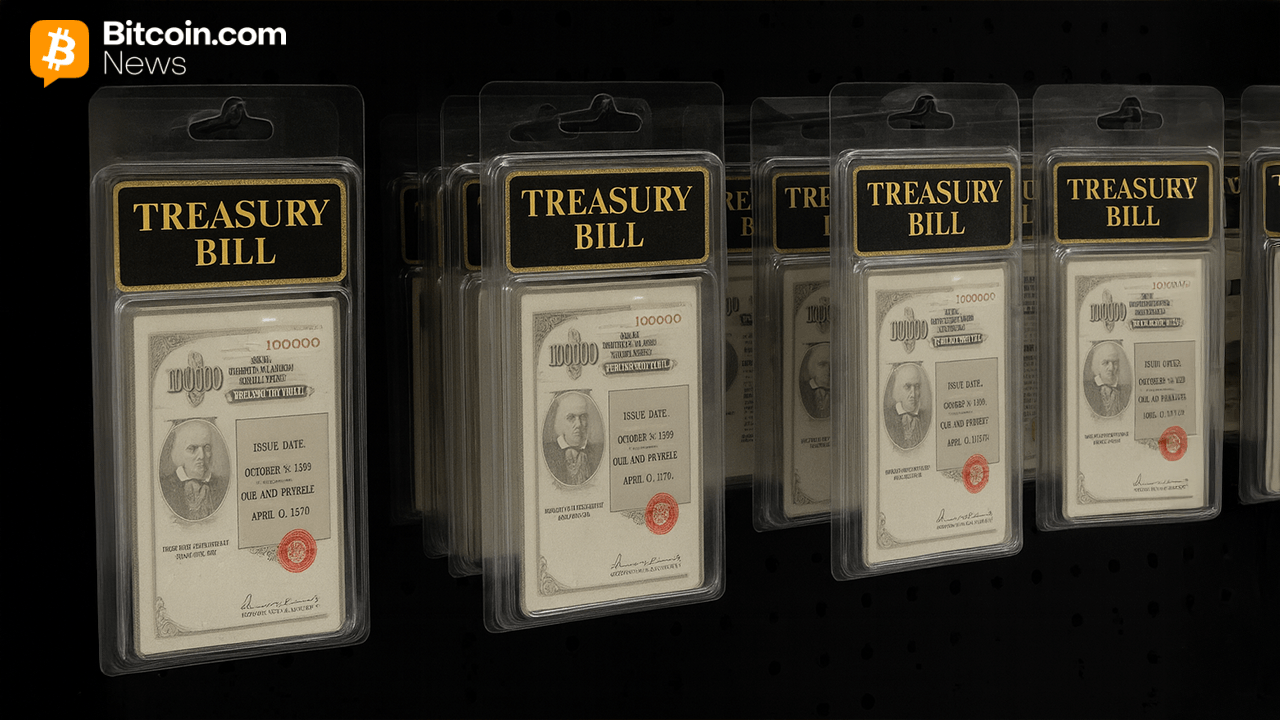
In 2025, the digital asset landscape has been fundamentally reshaped by a migration of institutional capital into tokenized US Treasuries. What was once a niche experiment has become an $8.7 billion safe haven for crypto investors seeking both yield and stability. The rapid ascent of onchain treasury tokens is not just a reflection of market volatility, but also a testament to how blockchain is rewriting the rules for fixed income and risk management.


From Volatility to Stability: Why Tokenized Treasuries Attract Institutional Money
The past year has seen an unprecedented institutional flight to safety within crypto. As Bitcoin and altcoins weathered sharp corrections, asset managers and treasury companies turned to t-bill tokens and other blockchain fixed income products as their preferred risk-off play. In March 2025 alone, the combined market cap of treasury-backed tokens jumped by $800 million, reaching $4.2 billion as investors sought refuge from DeFi liquidations and macroeconomic headwinds.
This movement is more than just a defensive maneuver; it signals a new era where tokenized U. S. Treasuries serve as both collateral and yield engines across DeFi protocols, exchanges, and institutional portfolios. BlackRock’s BUIDL product leads with $2.85 billion in assets under management, closely followed by Circle’s USYC ($866 million) and Franklin Templeton’s BENJI ($865 million). The rise of these platforms underscores a growing consensus: blockchain-based Treasuries offer superior liquidity, 24/7 settlement, and transparent auditability compared to their traditional counterparts.
The Regulatory Green Light: How Clarity Unlocked Billions in Capital
A crucial catalyst for this growth has been regulatory clarity around stablecoins and real-world asset (RWA) tokenization. In mid-2025, new legislation mandated that stablecoin issuers maintain reserves in highly liquid assets, chiefly U. S. Treasuries, directly driving demand for onchain treasury tokens. This regulatory green light gave traditional banks and asset managers the confidence to launch or expand their own tokenized Treasury offerings without fear of retroactive legal risk.
As a result, we’ve witnessed an influx of blue-chip financial institutions entering the space with robust compliance frameworks and operational standards that rival those in legacy markets. This convergence is not only legitimizing tokenized government debt but also accelerating adoption among risk-averse allocators who previously sat on the sidelines.
The Mechanics Behind Tokenization: Infrastructure Meets Innovation
The explosive growth in the treasury tokens market cap would not have been possible without major advances in tokenization infrastructure over the past two years. Platforms now offer seamless issuance, redemption, and transferability of t-bill tokens across public blockchains like Ethereum and Solana as well as permissioned ledgers catering to institutional requirements.
This infrastructure enables real-time settlement, a stark contrast to T and 1 or T and 2 cycles in traditional finance, and unlocks new use cases such as composable collateral for DeFi lending or instant liquidity for OTC desks during periods of stress. The technology stack underpinning these products is maturing rapidly, with rigorous third-party audits ensuring that each token remains fully backed by off-chain U. S. Treasury securities held at regulated custodians.
Implications for Crypto Market Structure
The mainstreaming of tokenized US Treasuries isn’t just about offering safer parking spots during bear markets, it’s fundamentally changing how capital flows within crypto ecosystems. Stable yields from government debt now underpin everything from decentralized lending pools to cross-exchange margining solutions.
As these products become deeply integrated into onchain financial architecture, they are redefining what “risk-free” means in the digital age. Treasury tokens now serve as the backbone for DeFi protocols, enabling more predictable interest rates, reducing systemic contagion risk, and allowing sophisticated hedging strategies that were previously out of reach for most crypto-native investors. The result is a more resilient ecosystem where liquidity crunches are less frequent and flight-to-safety flows reinforce, rather than destabilize, market structure.
Top Tokenized Treasury Projects in 2025
-
BUIDL by BlackRock: The market leader, BUIDL is a tokenized money market fund with approximately $2.85 billion in assets under management. It offers institutional-grade access to U.S. Treasury yields on blockchain, combining BlackRock’s reputation with on-chain liquidity.
-
USYC by Circle: Circle’s USYC holds around $866 million in tokenized U.S. Treasuries. It provides a transparent, yield-bearing digital asset fully backed by short-term government debt, designed for both institutional and DeFi use.
-

BENJI by Franklin Templeton: With $865 million in assets, BENJI allows investors to access U.S. Treasury securities via blockchain. Franklin Templeton’s platform is known for seamless integration with DeFi protocols and robust regulatory compliance.
The impact extends far beyond crypto-native platforms. Traditional exchanges and prime brokers are increasingly adopting tokenized Treasuries as collateral for derivatives trading and settlement. This cross-pollination has spurred a wave of hybrid finance (HyFi) ventures that blend the regulatory rigor of TradFi with the speed and programmability of DeFi. For institutional allocators, this means access to new sources of yield and liquidity without sacrificing compliance or transparency.
Challenges Ahead: Scaling Trust and Liquidity
Despite these advances, scaling the tokenized Treasuries market to its next phase will require overcoming several hurdles. Custodial risk remains a top concern; while most leading products are fully backed by off-chain assets held at regulated institutions, operational transparency must remain airtight to avoid eroding investor confidence. Additionally, interoperability between blockchains, and between public and permissioned ledgers, will be critical for unlocking deeper liquidity pools and preventing fragmentation as adoption accelerates.
Another challenge is educating both institutional and retail participants about the nuances of onchain fixed income products. The learning curve can be steep: understanding smart contract risks, counterparty exposure within DeFi protocols, and evolving regulatory requirements is essential for prudent allocation. Market leaders are responding by rolling out more robust disclosure standards and user-friendly interfaces to bridge this knowledge gap.
What’s Next: Tokenized Treasuries as the Foundation of Onchain Finance
Looking forward, it’s clear that tokenized US Treasuries have established themselves as a core building block for both institutional portfolios and decentralized economies. With $8.7 billion in market cap as of November 2025, a figure that would have been unthinkable just two years ago, the sector is poised for further exponential growth as new entrants join the fray and secondary markets mature.
Expect to see continued innovation around composability: multi-asset vaults blending T-bill tokens with stablecoins or corporate bonds, automated portfolio rebalancing via smart contracts, and seamless integration with global payment rails. As regulatory frameworks solidify globally, even sovereign wealth funds may soon enter the space, cementing tokenized government debt as both a safe haven for digital wealth and an engine for onchain financial innovation.
If you’re interested in exploring how these trends could impact your strategy, or want to dive deeper into specific projects shaping this $8.7 billion market, check out our comprehensive guides on why tokenized U. S. Treasuries became the institutional safe haven in 2025 or how they’re transforming collateral markets.